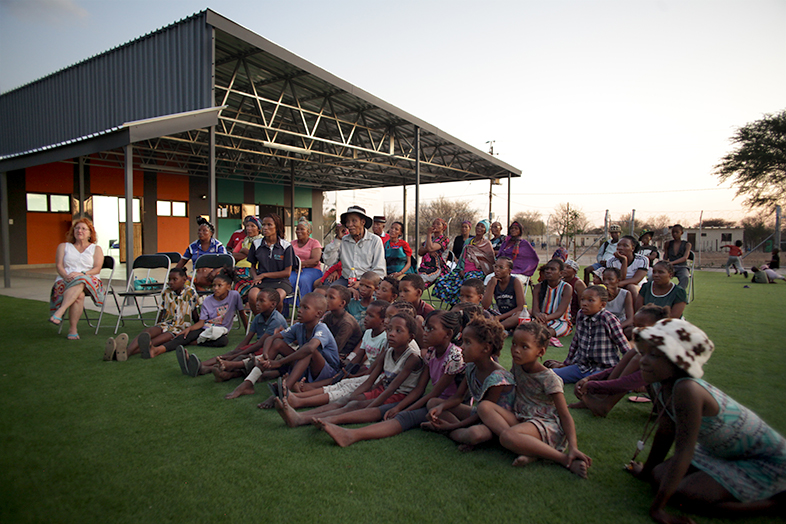
A screening of A Kalahari Family for the Ju/'hoan community in Tsumkwe, Namibia. Photo by Frank Aveni
In October 2024, DER Executive Director Alice Apley and Technical and Creative Director Frank Aveni had the honor of traveling to southern Africa as part of a film repatriation initiative. The trip grew out of our now long-standing partnership with the !Khwa ttu San Heritage Center outside of Cape Town and, closer to home, with Harvard’s Peabody Museum of Archaeology and Ethnology.
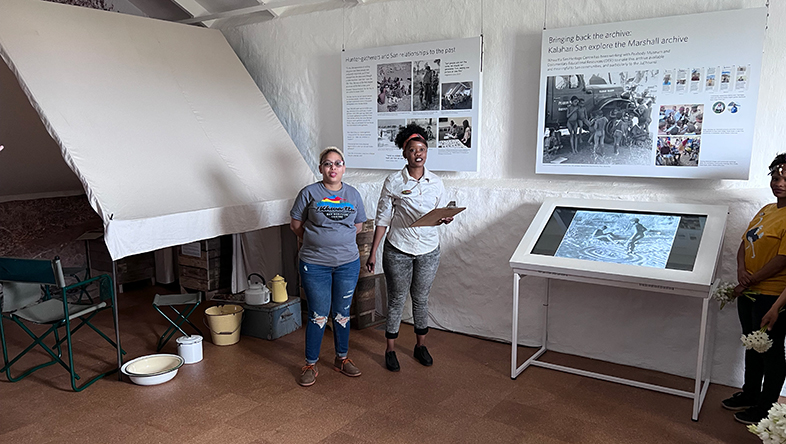
A motivating factor for this trip was to visit the exhibition currently on display at the !Khwa ttu San Heritage Center: Bringing Back the Archive: The San Exploring the Marshalls’ Archival Legacy. DER staff, along with colleagues Ilisa Barbash and Kimberley Allegretto from Harvard University’s Peabody Museum of Archaeology and Ethnology, provided !Khwa ttu with films and photographs for this exhibition and shared more about the larger story of the Marshall expeditions during the 1950s and John Marshall’s continued work as an activist and filmmaker in the community.
DER and Chris Low, the head planner of !Khwa ttu’s Heritage Center, first corresponded back in 2015, when Low reached out to DER to include clips from Marshall’s work in the permanent exhibits they were planning. When the Peabody Museum completed a project in 2023 to digitize the 30,000+ images from the 1950s Marshall expeditions, the idea for a dedicated exhibition was born. DER and the Peabody hosted Chris Low along with !Khwa ttu curator Magdalena Lucas in Cambridge/Boston in 2023 as they were planning the exhibition.
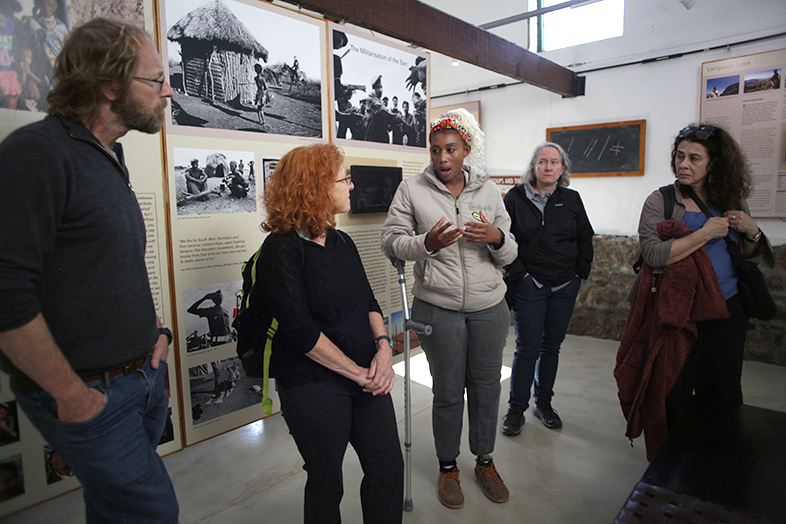
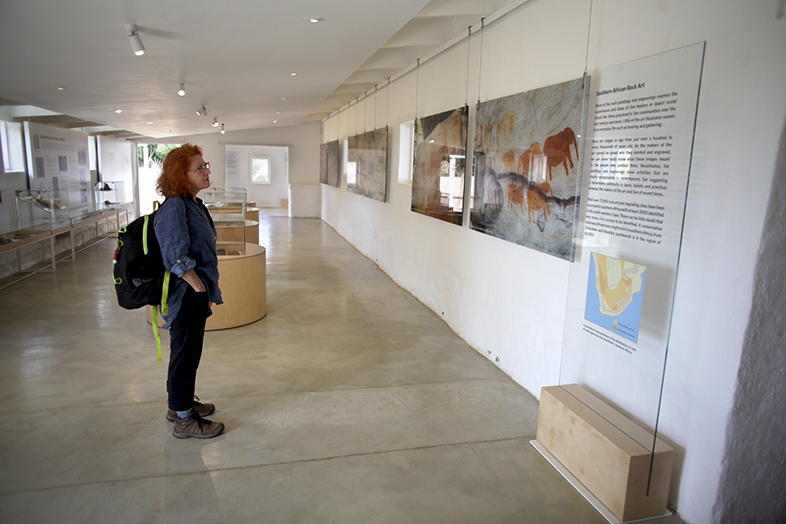
We were delighted then, that our first stop in southern Africa was !Khwa ttu, where we were welcomed by Magdalena Lucas, Chris Low, and staff members of the center. It was moving to see the Marshall photos and films in Bringing Back the Archive: The San Exploring the Marshalls’ Archival Legacy set in a San context. The exhibit included a series of wall panels setting the historical context of the 1950s Marshall expeditions, a touch screen containing over 300 still photographs, organized by location and activity, and a mock camping site with a monitor and clips from the DER films The Hunters (1957), The !Kung San: Traditional Life (1987) and To Hold Our Ground: A Field Report (1991) playing on a loop in the tent.
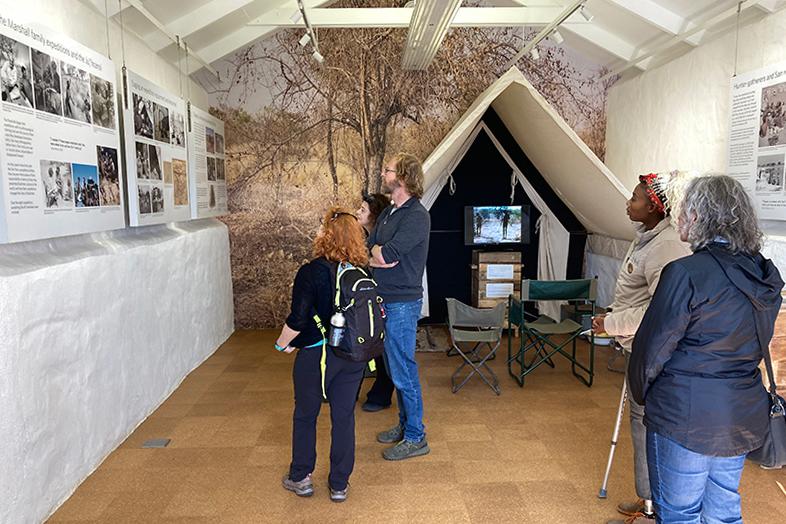
Visiting the Marshall Exhibit at the !Khwa ttu San Heritage Center. Photo: Frank Aveni
My favorite part of the exhibit was the inclusion of contemporary San voices engaging with and responding to the materials. These included questions and comments like “What was the exchange between the San and these people for taking images and extracting traditional knowledge” (||Oce Khau Morris, 2023), “There’s no problem with that hunting film because that’s just how we used to live in the past.” (Kerson Jackson, 2023), and “San people are not the same, we should not generalise from seeing one picture or one film.” (Magdalena Lukas, 2023).
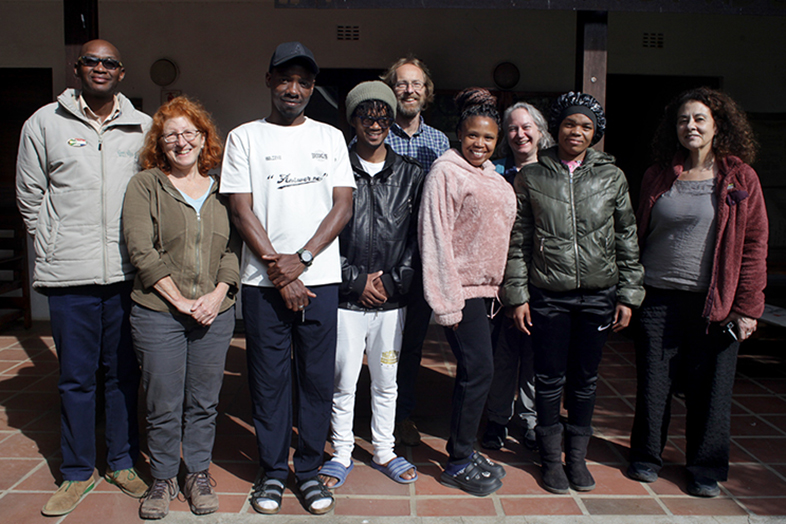
While at !Khwa ttu we also had a chance to meet with board members, staff and interns. I was particularly fascinated by how the museum is forging a pan-San sense of belonging. During our visit, we also learned that in addition to the Marshall Archive exhibit, the museum also houses extensive permanent exhibitions that explore the many facets of San cultures past and present. Works draw on the spiritual expressions and beliefs of San cultures, material cultures and artistic practices – from rock art to contemporary painting – and the socio-historical and political context is explained, including an examination of colonial history.
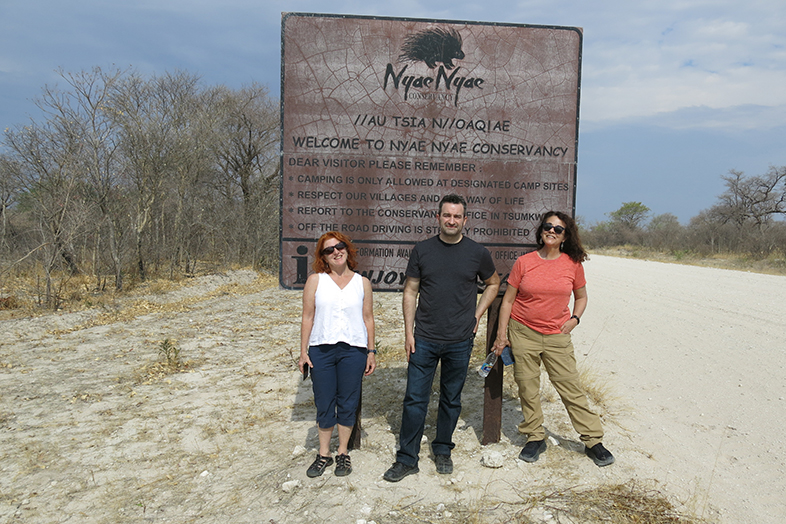
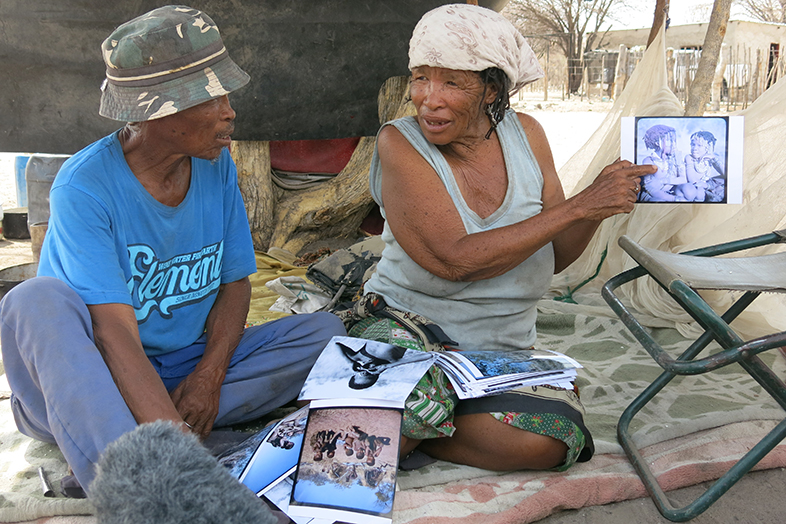
From there, we traveled North to Namibia to the Ju/hoansi community in Nyae Nyae, where John Marshall filmed and worked as an activist for the community, on and off, for over 50 years. We reconnected with people who had worked with John (like Tsamkxao Chief Bobo) and also made new contacts with the younger generations. At the heart of this part of our journey were the many opportunities to share and talk about the films and photos, in formal and informal contexts.
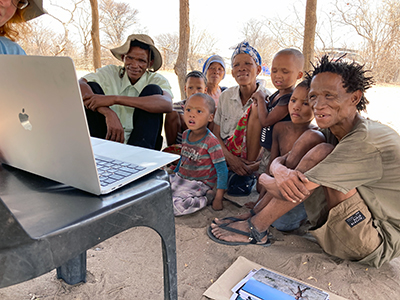
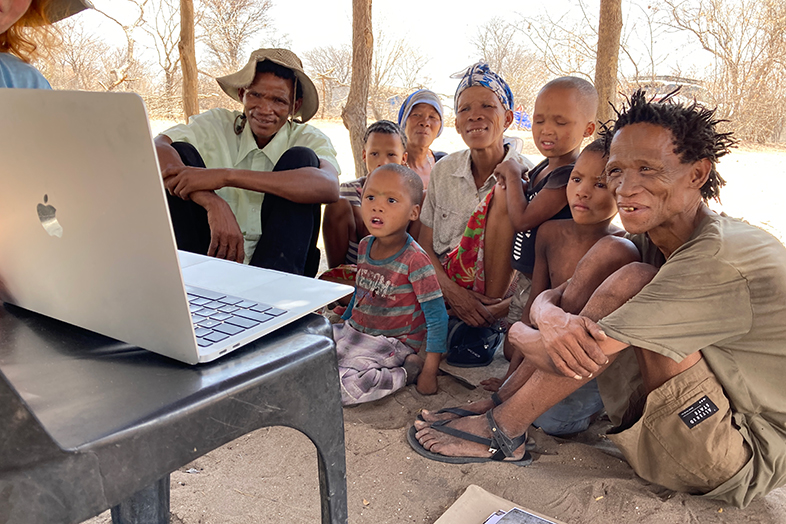
Laptop film screening for N!amace and family in Nyae Nyae. Photo: Frank Aveni
We shared films on my laptop under the shade of a Baobab tree and culminated our visit with a public screening at a new Montessori school in Tsumkwe, attended by a rapt audience of viewers both young and old. There was great enthusiasm for the archive material and a desire for permanent access to these resources about their heritage and history. At the same time, community members pointed out the many challenges associated with making the materials permanently available.
It was a whirlwind trip, but we left with a new appreciation for the value of the Marshall archive to the community, renewed relationships, and a commitment to supporting community efforts to engage with their heritage and history.
To hear more about the trip and, please join us on for a free online event, “Reflecting on Returns: John Marshall’s Ju/hoan Film Collection in Southern Africa.” This will be an open discussion with Alice Apley and Frank Aveni of DER and Magdalena Lukas and Chris Low of the !Khwa ttu San Heritage Centre on the motivations, challenges, and successes of making archival cultural materials accessible to the San community. This event is free with registration.
Learn more about the !Khwa ttu San Heritage Center:
Learn more about the Marshall Family Archives at the Peabody Museum of Archaeology and Ethnology at Harvard University.
Photo Gallery
Photos by Frank Aveni except where noted.
-
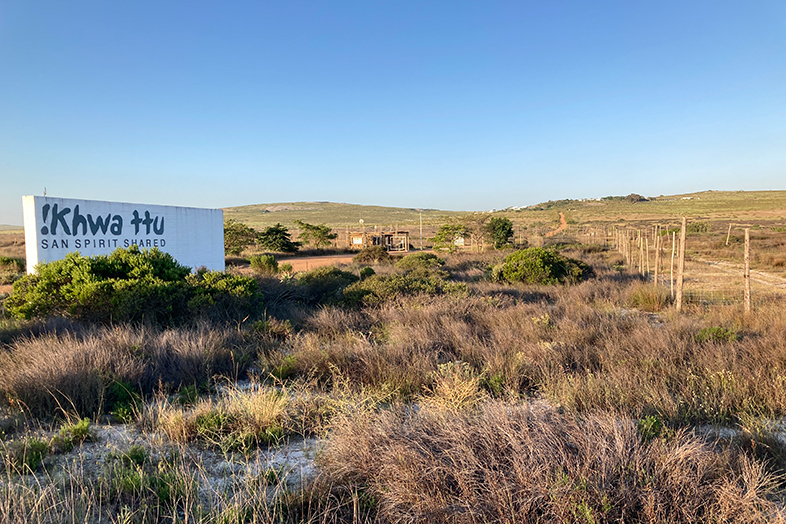
- !Khwa ttu San Heritage Center
-
- Meeting with staff and interns at !Khwa ttu
-
- Tour of the Encounters gallery at !Khwa ttu
-
- Viewing exhibits at the !Khwa ttu galleries
-
- Welcome sign at Nyae Nyae Conservancy. Photo: Chris Low
-
- Laptop film screening in Nyae Nyae
-
- Bao and her husband view photos from the Marshall Family Archives
-
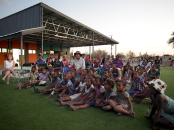
- Ju/’hoan community film screening in Tsumkwe